Vogue of the future, an object for digital consumption?

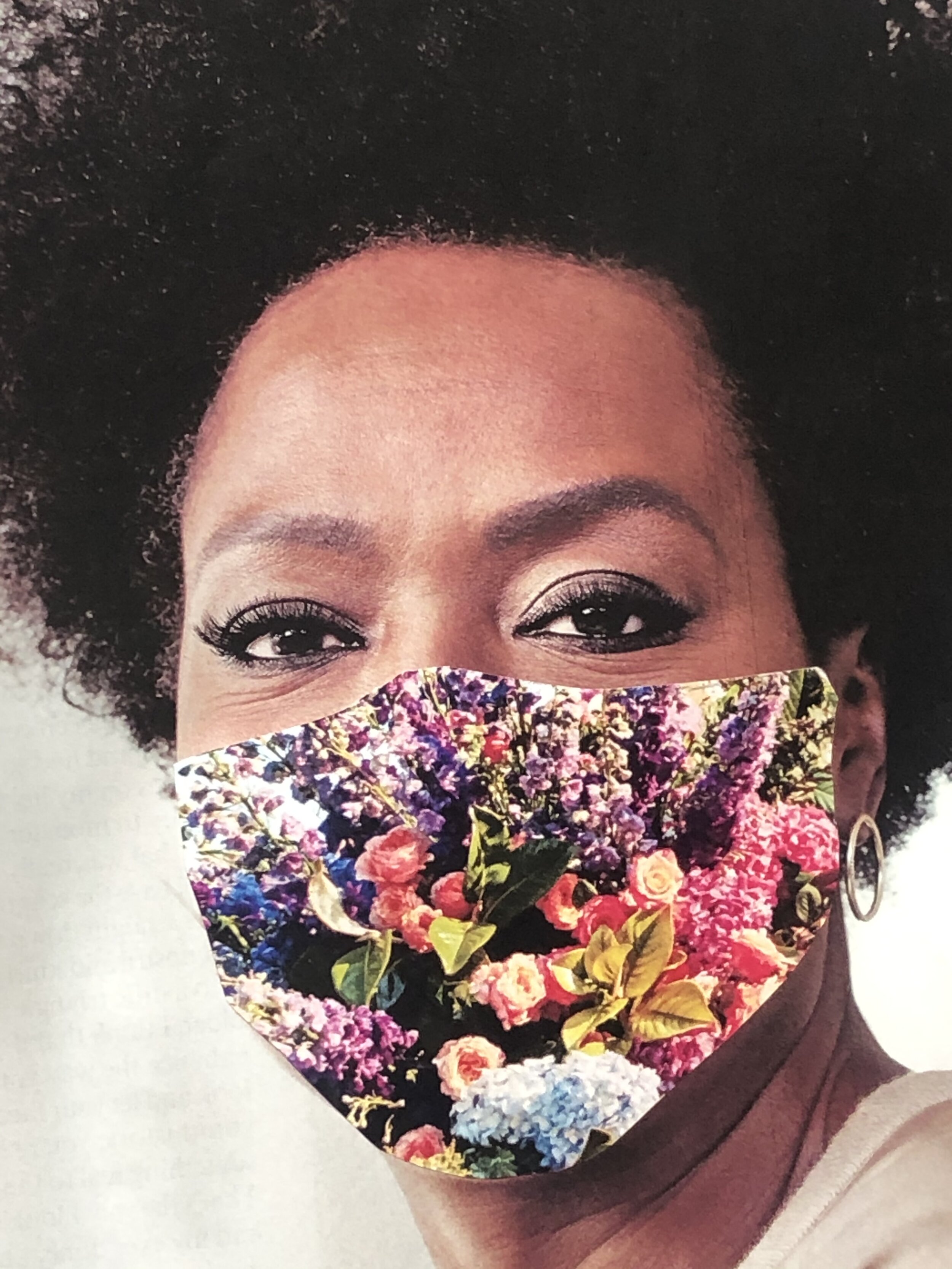
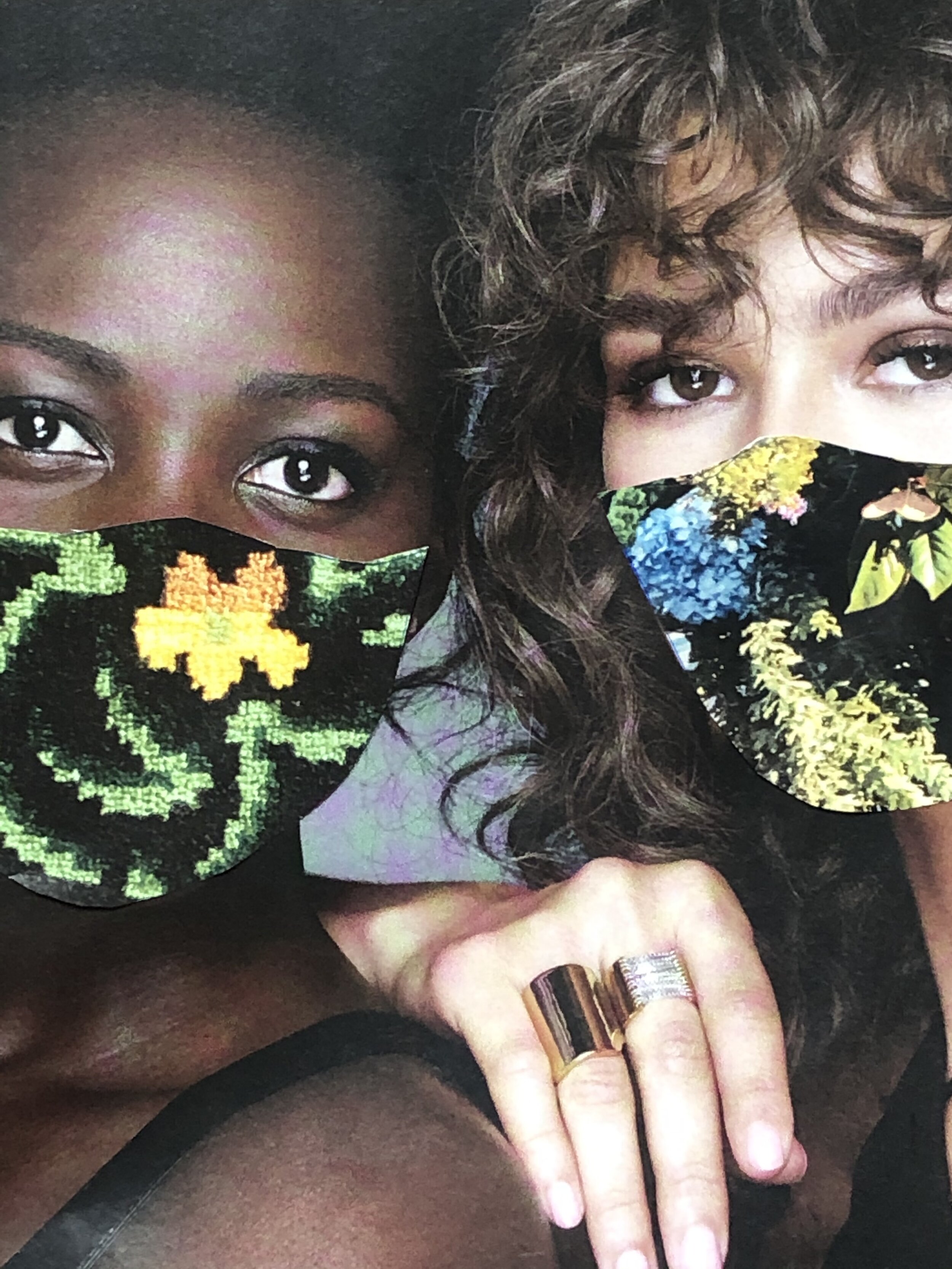
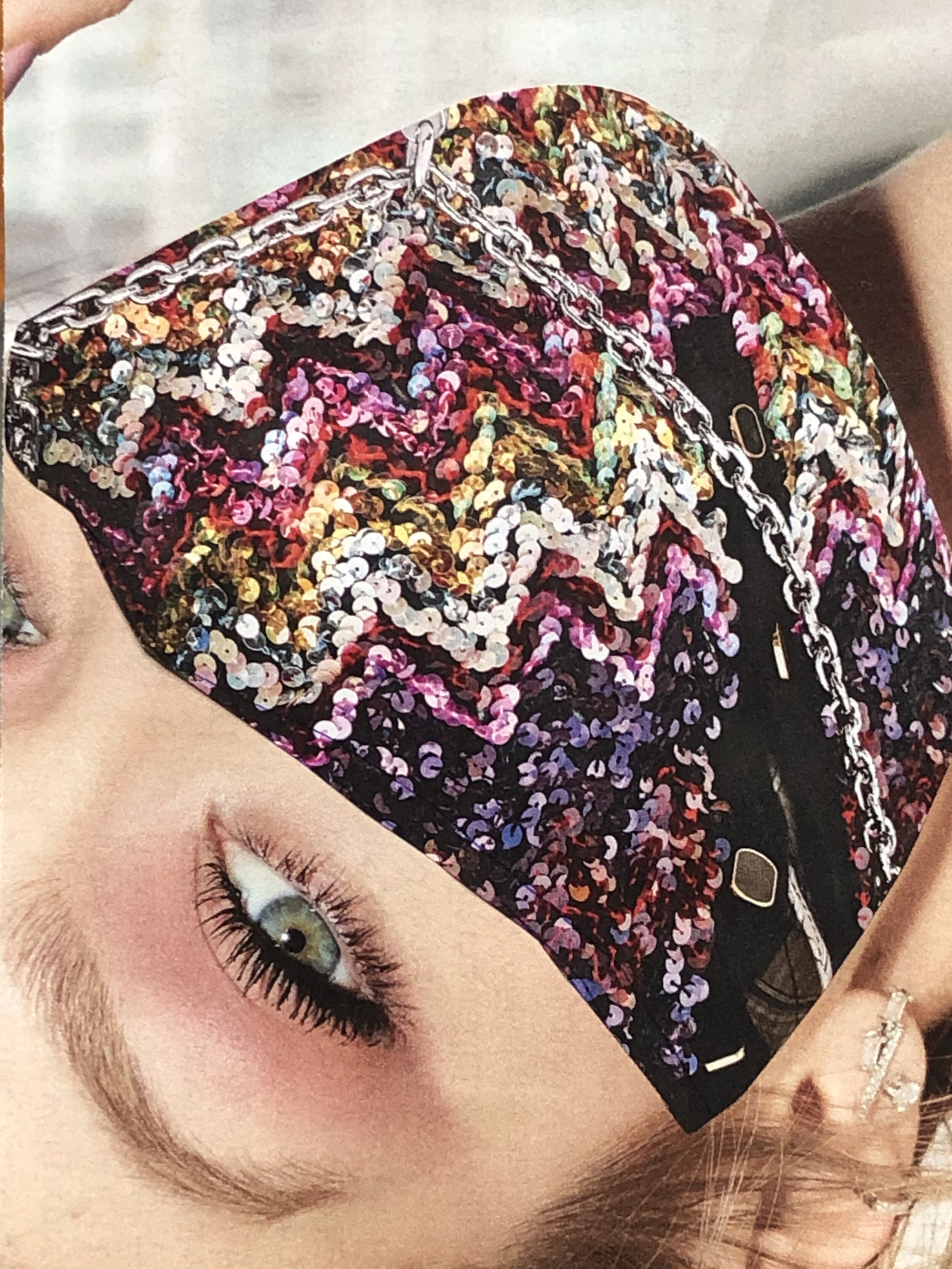
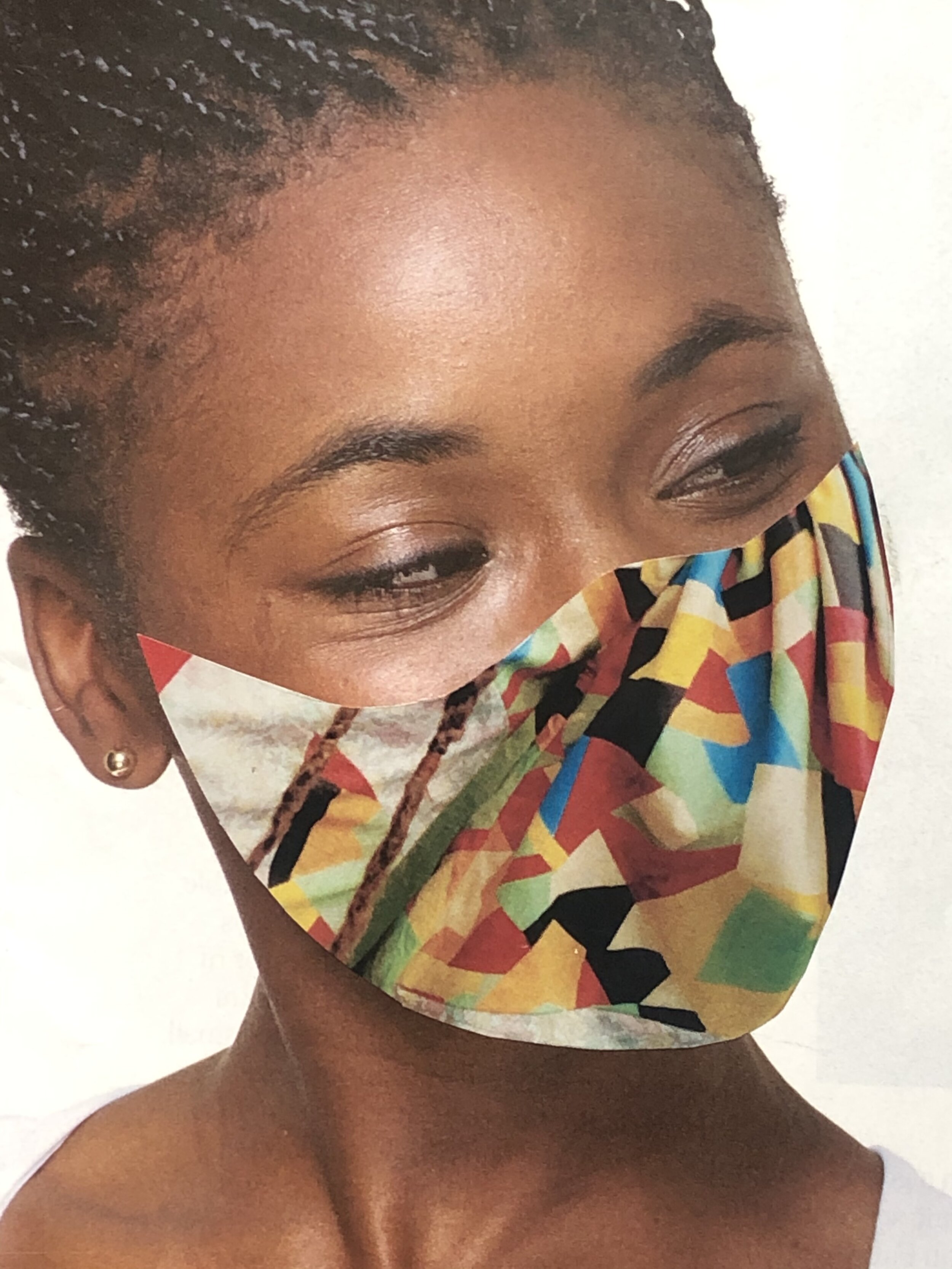
With tiny scissors, glue, and tweezers, I’ve covered almost 200 faces of the May 2020 issue of Vogue using only the paper available from April’s issue. I’ve made a face covering for every face presented in the magazine but I don’t know why I did it — to keep from going mad during quarantine? — or what to do with the completed object.

All I want to do now is get the magazine into the hands of friends and watch and listen for their reactions. But the pages are becoming fragile with all of the handling and I’m terrified to let it go in the mail. I fear losing this baby, both an albatross that kept me hunched over my desk for six weeks but also a calling that gave me purpose during these uncertain times.
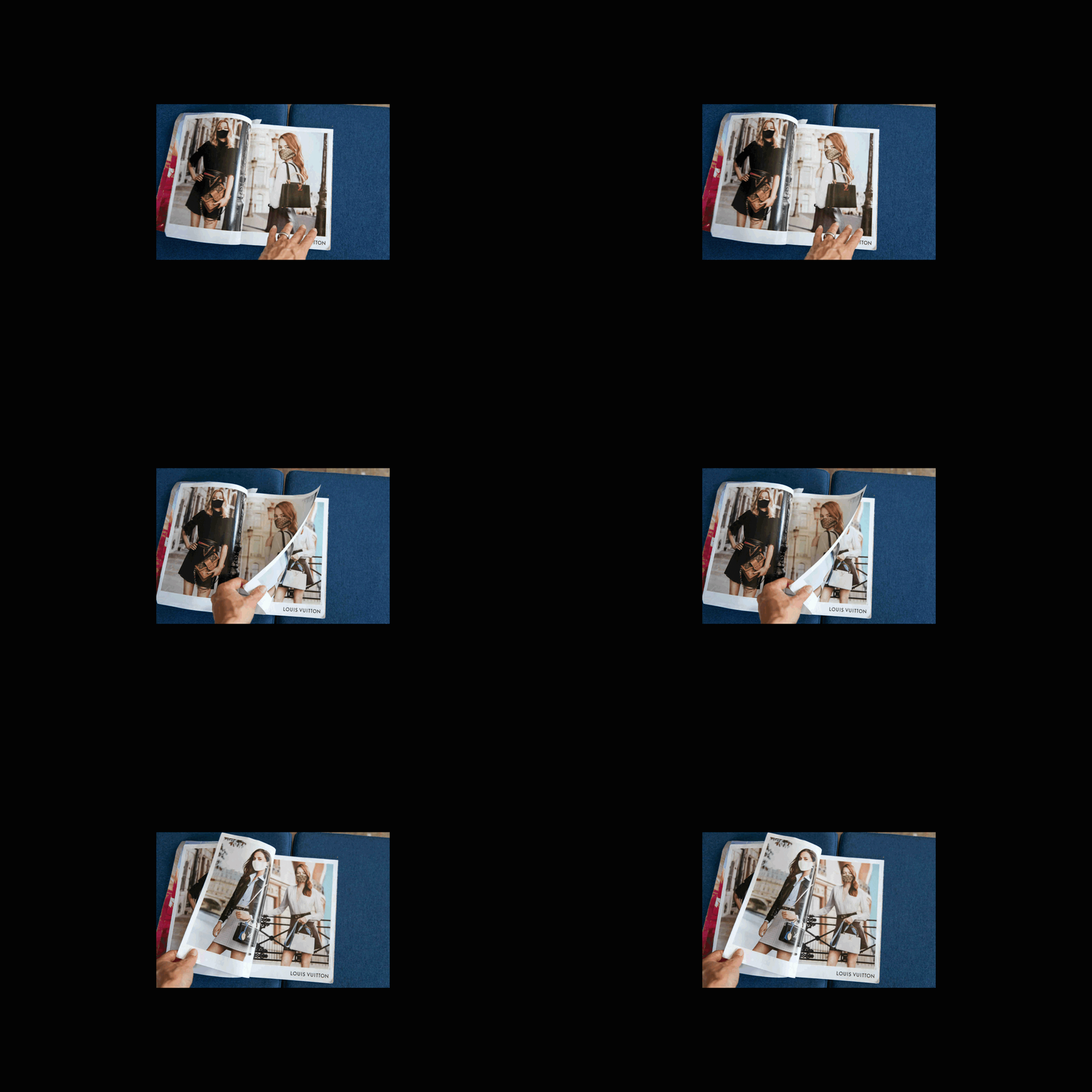
Testing stop motion animation with the modified May 2020 issue of Vogue.

Testing stop motion animation with the modified May 2020 issue of Vogue.

I’m choosing to see this as yet another opportunity to expand my practice — to blend object and digital spaces — and I’m calling upon older video works to inform the next steps. My “perfect room” rendered by Corey Beaulieu for Where Ever You Go There You Are, 2012 was missing a bathroom, kitchen, and closet but damn that room was seductive to me at the time. It played in the same space this work does, using luxury shelter magazines as its starting point to question desire and necessity.

As I blunder around learning Adobe Premiere, I’m beginning to invent a character who might be flipping through this issue. Is it Anna Wintour, the editor of Vogue? Or a young transgender woman? Does she identify with Vogue’s aesthetic elitism? Or aspire to the One Percenter lifestyle the magazine centers on? And is she looking at the magazine now in the midst of the pandemic or in some future moment? Or is this all perhaps a media play, destined to be a press release and pdf version of the magazine slipped into the archives of Vogue as I did at Elsewhere Museum with The Future Is Today?

All that is clear to me is that the longer this pandemic, the more our prior notions of luxury will likely look like the hemlines of the past.

Taken for granted

Families and our relationships within them are complicated. So too is our place within nature. Too often we take both for granted. 

I spent a good part of this Mother’s Day, my first and hopefully only in a pandemic, taking apart and upgrading an old iMac with the hopes of returning to the film I had digitized from three generations of Wolfs and Gilberts. 

Looking back on this last video I made, I finally understood why I chose today of all days to recommit to this work. Mom and I are seen at the end, at about the same age, 20+ years apart.

Single channel video using found family footage (16mm and 8mm) from 1937-1978; focusing on land use management, nature and play. 2:49 min.

IMG_4463.jpg

Modeling good behavior

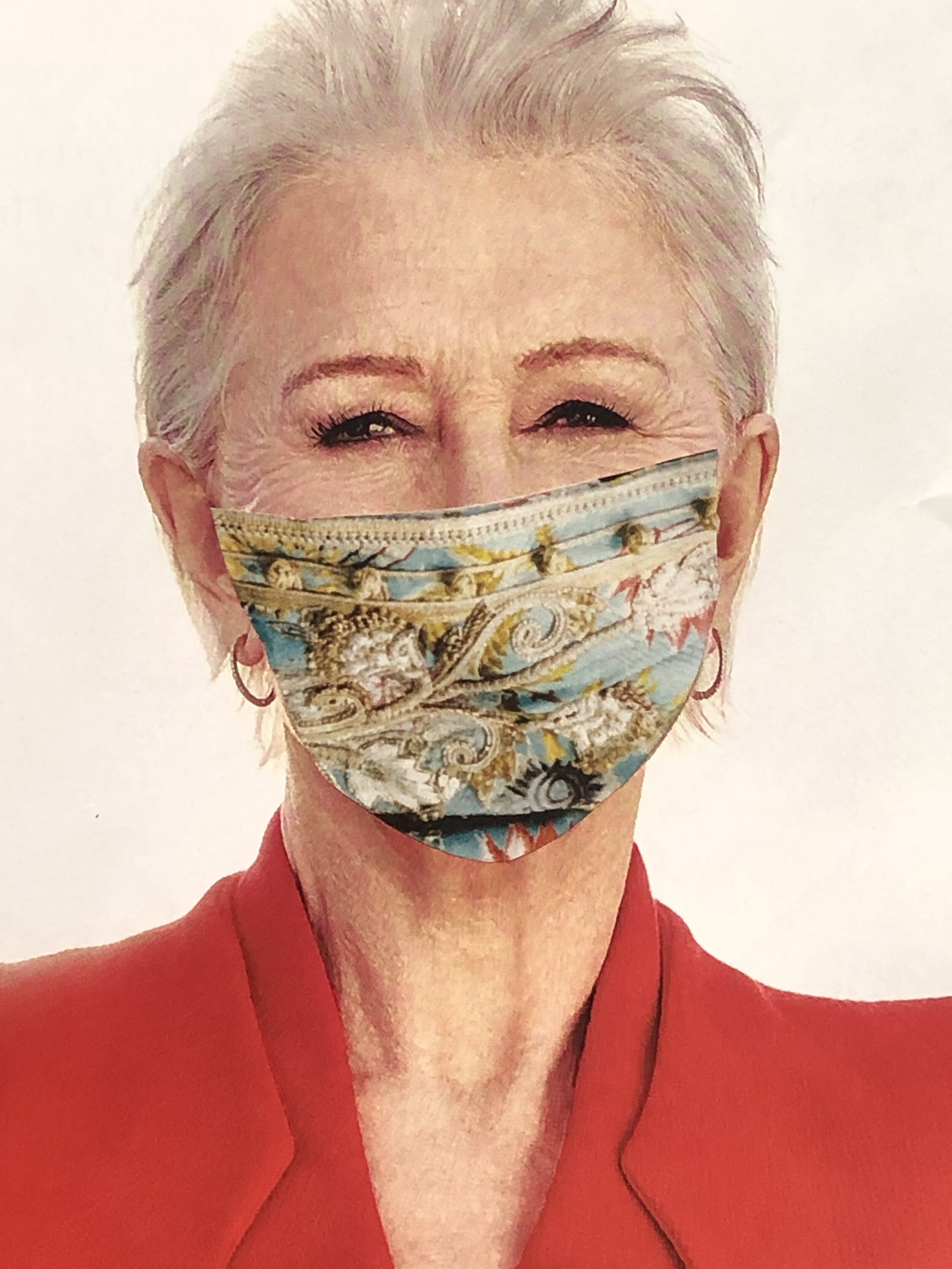
It struck me as odd and out of step that this May’s issue of Vogue didn’t show a single masked person. So, I’m working on making masks for every one of the models in the May issue.

Here are a few from April’s edition and a sketch for something, I don’t yet know what, to address how this pandemic is affecting girls and young women.


Masks for Vogue, April 2020. Magazine papers on product models from the April 2020 issue of Vogue US.

4hands.jpg

“Four Hands,” 2020. Sketch for performance and/or performance objects.
Magazine, watercolor paper and pencil. 8.5”x11”


Welcoming Fear

It just seems all too neat. Too contrived. Six weeks ago, I set off on a journey, a recommitment to my studio practice that included a location move and Marie Kondo-ing decades of supplies. I brought to the new space only drawing and Sidewalk Series materials, books, and video equipment. And my couch. I knew I would figure out what to do next. I expected it to take much longer. And I never imagined it would spring open, literally, with a hatch door.

Today, the unfounded fears I critiqued in my 2013 thesis work, "Hide:Seek," are now founded. The exhibition seems almost prescient in our COVID-19 world. Look at that overly protected woman with a bonnet dusting the solar panels. Does she have nothing better to do? Or does she so fear being cut off from the grid that she stands guard battling every leaf that could between her and connectivity? Watch her balance on boulders precariously tossed on top of each other one hundred years ago. They weren't meant to be supportive, they were made to keep people out, just like the systems underpinning the U.S.'s economy and healthcare that are now laid bare and crumbling. And that pink bandana she's mending, a mask?

The work of creating fictitious companies that sold water filtration straws alongside fuzzy slippers and inventing characters who prioritized fashion over function manifested my personal and domestic struggles of the time — namely, a failed marriage and generations of fear that wanted to be exorcised from my body. But there were kernels of truth in that work that had always been with me and which continue to sustain my practice today, such as my love of urbanity and imagining alternate realities. They were sown seven years ago and have confirmed my belief in the transformative power of staying with uncertainty, and of working through fear to get to a better place.

Today, I'm the same artist. Still prioritizing fashion. Still wildly imaginative and overly ambitious. I happen to be running a real organization now, a non-profit that attempts to bring the thorny issues of our times and support other artists in their journeys. We make public art. But the fears that sparked the creation of Alone Together Tent Dress and Unpack, and the concerns of running a $1.5M endeavor lurk in the same dark shadows. There, I whisper, " I can't do this alone. Are we on the brink, or is it my imagination? Am I doing enough? And how can we do this better, together?"

Scarcity thinking keeps you and me small. But it doesn't mean we need to put a pencil between our teeth and force a smile. (Ever try it? It works.) It's ok to look at this train wreck before us, to witness the failure of government and of people to protect our most vulnerable. It's ok, and probably a little useful, for us to feel survivor's guilt.

It's also necessary to play.

So, while we wait out the timeline of this pandemic and ponder what public life will look like in the future, I'm committed to acting out these new/old fears that have once again taken hold of my imagination. I'm leaping off of metaphorical rocks, unsure if it means I'm overjoyed or certifiable. Today, I opened the roof hatch. The last time I was on the roof of my apartment modeling Ilumina Tanks, Boston was reopening after the Marathon Bombing. It's a physical place I've been in before. It's mental territory I need to navigate again. I brought my video camera home. I have my sewing machine. And I know what needs to happen next.

I invite you to walk with me as I blunder around in these physical, mental, and digital spaces. I'm not keeping this door locked any longer.

IMG_4248.jpeg

Newell Flather Leadership In Public Art Award for curation

I was honored to be named the inauguration co-recipient (as curator) of the Newell Flather Leadership In Public Art Award from New England Foundation for the Arts (NEFA) last night with the irrepressible Silvia Lopez Chavez (as artist). It was a beautiful event at the Four Seasons and so energizing to be among so many friends and colleagues who know the challenges and rewards of this crazy art form.

The award comes with an honorarium that will allow me to hire movers to help with the upcoming studio transition — a first for me and welcome news for my stepsons who have moved me at least twice now.

And in a funny twist, Silvia and I are sharing the award and the new studio too!

NEFA.jpeg
L to R: me, Silvia López Chavez, and Cathy Edwards of NEFA

L to R: me, Silvia López Chavez, and Cathy Edwards of NEFA


Painting as feeling exploration

Most kids outgrow finger painting. At some point they hang up their smock in favor or more sophisticated methods of communication. I was not one of those kids.

In ninth grade I was still craving the visceral sensation of pushing paint around and of witnessing a new color appear from the blending of two others. And being the very ambitious person I remain today, I asked my parents for a set of oil paints for Christmas.

I didn’t get the oils but they gave me so much more. My parents carved out a corner of our basement, the one at the edge of the slope with a small window, and declared it my studio. My very own studio! A place I didn’t have to share with my siblings. Now, don’t get the wrong idea. Said “studio” was still in a basement and next to the clothes dryer which was perpetually on. And in fact, laundry was one of my chores. So early on I learned the impossible balance of domestic work and artistic production.

My first painting in that studio, begrudgingly executed in teenage exacerbation in acrylic, was an abstraction of my boyfriend playing guitar. In a nod to street artists of the time, or maybe because acrylic didn’t deserve real canvas, I used cardboard as the substrate. This masterpiece whipped off in 45 minutes relied heavily on the red, oranges and blues I’d observed in a Rauchenberg, with an attempt at the fluid gestures of De Kooning, and a few strong diagonal dark strokes coming off the guitar that, to this day, still insist on dominating my work. (Instagram confirms.) It was a pretty terrible painting but it did allow me to express, at least to myself, the joy I had in my heart for this boy and his music.

You see, as a really shy, sensitive kid, I felt it all – sometimes crying myself to sleep for the kids starving in Africa – but I had trouble processing what I was feeling. I learned to compartmentalize overwhelming feelings. Call it a coping mechanism. Call it learned behavior from a family of creatives brought up in times when you didn’t dare call yourself an artist; or a faggot, or an immigrant.

So enter paint. Paint helped me make sense of the hypocrisy of a religion that called to me but excluded me as a female. It helped me deconstruct the alcoholism in my family. Paint helped me find my voice in relationships that felt one-sided. It even came back in grad school after mentor Barbara Galucci released me by declaring, “you’re a sculptor.” Yes, even after finally being given an identity that fit, (a sculptor!), it was still back to painting I turned when the message of my sculptures was incoherent. (The resulting picture of a woman standing in a broken home pretty clearly let it be known that I was processing my failed marriage.)

Today, I live a life that doesn’t guarantee me much time for painting, or at least the kind of hours-long endurance painting I prefer. I meditate daily. I write. Both help me process feelings in a safe environment. Meanwhile, running helps me release the yang energy created as I manage a start-up non-profit. But sometimes these very healthy practices aren’t enough. Sometimes, and especially while seeing a particularly exciting painting show, I get an overwhelming sensation. My body screams, I NEED TO PAINT!

That sensation is a warning sign. It means I’m off balance. It means there’s something I’m not addressing. So today, the first day of a week-long vacation, seems like a good time to be a little self-indulgent. I’m pulling out the watercolor pencils and paper to check in with myself.

I will try to resist painting a portrait of my hunky husband surfing...

Sample “check in” from a Thanksgiving vacation. Thinking a lot back then about temporary shelters.

Sample “check in” from a Thanksgiving vacation. Thinking a lot back then about temporary shelters.

Can Boston Be A Public Art City?

Yes—if we take risks, flex new muscles, and forge creative alliances

Despite its moniker, Boston is not the hub of the universe. Yet the city is ripe with potential to defy its own history and create a new model for connective experiences in our public spaces, one that transforms our landscapes and the ways in which we relate to one another as citizens in these divided times. Boston should fully embrace temporary public art as a catalyst for the cultural change we seek.

We have a ways to go. For starters, Boston must address its splintered cultural identity, funding structures, and fragile arts ecosystem that make it prohibitive for artists to thrive….

Continue reading this guest post for ArchitectureBoston.

Joseph del Pesco and Jon Rub. Monuments, Ruins, and Forgetting. Photo taken in July, 2019 while visiting Counterpublic.

Joseph del Pesco and Jon Rub. Monuments, Ruins, and Forgetting. Photo taken in July, 2019 while visiting Counterpublic.

Demian DinéYazhi´. Falling is not Falling but Offering.

Demian DinéYazhi´. Falling is not Falling but Offering.

Monuments of Now

Ever notice how you can go to great lengths for a fresh perspective only to be reminded of what you already know?

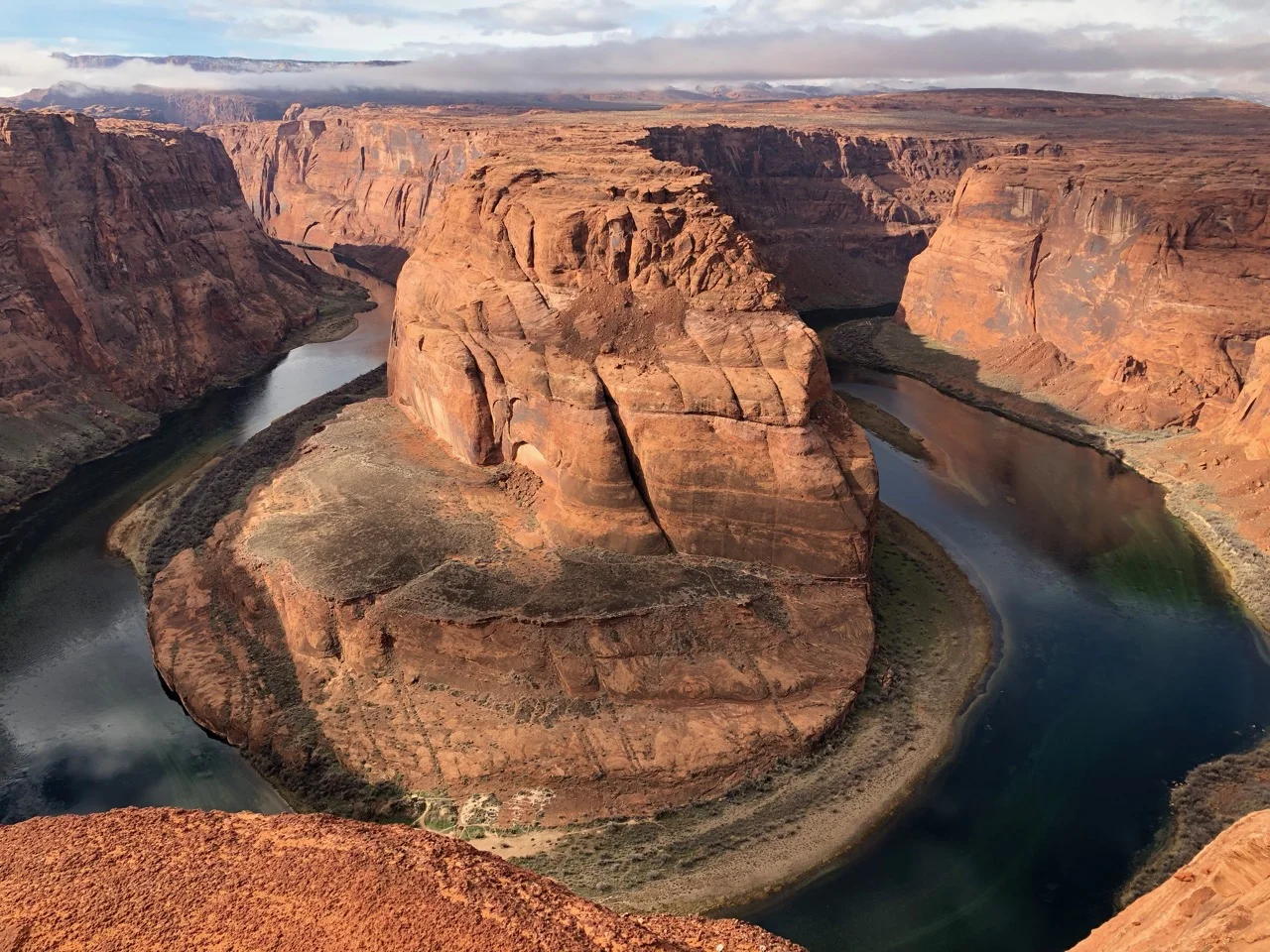
Horseshoe Bend, Page, AZ.

Horseshoe Bend, Page, AZ.

I recently drove 1,000 miles of deserted Arizona roads to see some of our country’s most memorable landscapes including the Grand Canyon, Horseshoe Bend, and Monument Valley. I scrambled up rocks, peered over cliffs, and threaded my way through canyons no wider than a person. I also witnessed first-hand the impact of top-down government decisions — from the systemic poverty within Native American reservations, a result of being forced off their land, to the quickly deteriorating amenities of the shuttered National Park Service thanks to the federal government shut down.

More on the Now + There blog.

Accelerating Empathy

A year ago at this time, seven near-strangers sat in a circle in the Artist Studio Building where Now + There has been incubating since 2015. Katarina Burin, Ryan Edwards, Lina Maria Giraldo, Stephen Hamilton, Ekua Holmes, and Cynthia Gunadi & Joel Lamere (partners in life and business) were there as part of the inaugural Now + There Accelerator, a pilot program I created to support my fellow Boston artists in creating more public art in Boston.

Read more on the Now + There blog or visit the Accelerator page.

Checking out Lost House by GLD Architects with a local in Fields Corner, Dorchester.

Checking out Lost House by GLD Architects with a local in Fields Corner, Dorchester.

HUBWeek Changemaker interview

Back in 2013, I saw a picture of James Wines’ Ghost Parking Lot and it unlocked a rush of childhood memories. For the first seven years of my life, I lived in Hamden, Connecticut, a suburb of New Haven, and I would see Wine’s work, older model cars covered in asphalt looking like they were both rising up and being swallowed under by the parking lot of our grocery store. When I saw the photo, it all made sense — my fascination with asphalt as a material and my desire for the unusual in everyday contexts.

A similar memory jog occurred in 2010 when Jonathan Lippencot published Large Scale, a history of the Lippencott sculpture production center. Also in the New Haven area, the factory’s grounds became an unofficial sculpture park and the site of family walks. My dad tells me I saw versions of Oldenburg’s Lipstick (Ascending) on Caterpillar Tracks there. I can’t remember it, but I do know that I am inexplicably drawn to very, very large sculpture. (And it’s never big enough.)

We lived modestly in Hamden. My dad was a newspaper reporter. We drove an old car with a hole in floor. 

Read more on Medium.

Looking at Ann Lewis’ See Her mural installation, summer 2017.

Looking at Ann Lewis’ See Her mural installation, summer 2017.